Sunday

Μελομακάρονα


ΥΛΙΚΑ

  • 250 ml ελαιόλαδο
  • 125 ml σπορέλαιο
  • 125 ml χυμό πορτοκαλιού
  • 65 γρ ζάχαρη
  • 1 κγ μαγειρική σόδα
  • ξύσμα 1 πορτοκαλιού
  • ½ κγ κανέλα, προαιρετικά
  • ¼ κγ γαρύφαλλο σκόνη, προαιρετικά
  • 750 – 800 γρ αλεύρι μαλακό
  • 40 γρ καρύδια
Για το σιρόπι:
  • 230 γρ ζάχαρη
  • 250 ml νερό
  • 125 ml μέλι
  • 1 ξυλάκι κανέλα
  • λίγη φλούδα πορτοκαλιού
Για το γαρνίρισμα:
  • 200 γρ χοντροκομμένα καρύδια
  • ½ κγ κανέλα
  • ¼ κγ γαρύφαλλο σκόνη


ΕΚΤΕΛΕΣΗ

  1. Σε ένα μπολ ρίχνω το ελαιόλαδο και το σπορέλαιο.
  2. Στο ποτήρι με το χυμό πορτοκαλιού, διαλύω τη σόδα, ανακατεύω να αφρίσει πάνω από το μπολ και το προσθέτω στο μείγμα μαζί με τη ζάχαρη, το ξύσμα πορτοκαλιού και τα αρωματικά (κανέλα, γαρύφαλλο) αν τα επιθυμώ.
  3. Σταδιακά ρίχνω το αλεύρι μέχρι η ζύμη να μπορεί να πλάθεται.
  4. Δημιουργώ μπάλες που στη συνέχεια πλάθω σε οβάλ σχήμα.
  5. Κάθε ένα το βάζω πάνω στη ξύστρα, στη μέση τοποθετώ από ¼ του καρυδιού και το γυρίζω κλείνοντας μέσα του τον ξηρό καρπό.
  6. Συνεχίζω όμοια με όλη τη ζύμη και τα τοποθετώ σε λαδόκολλα στο ταψί.
  7. Ψήνω στους 180*C στις αντιστάσεις, στο φούρνο για 25 περίπου λεπτά.
  8. Τα βγάζω από το φούρνο και τα αφήνω να κρυώσουν τελείως.
  9. Ετοιμάζω το σιρόπι βάζοντας σε ένα κατσαρολάκι τη ζάχαρη, το νερό, την κανέλα και τη φλούδα πορτοκαλιού να βράσουν για 2 λεπτά. Βγάζω από τη φωτιά και προσθέτω το μέλι ανακατεύοντας για να λιώσει και να ενσωματωθεί.
  10. Με μια τρυπητή κουτάλα βυθίζω τα μελομακάρονα στο ζεστό σιρόπι για μισό λεπτό, τα βγάζω, στραγγίζω και τα αφήνω στη λαδόκολλα. Αν το σιρόπι αρχίζει να κρυώσει το ζεσταίνω στην πιο χαμηλή φωτιά (1).
  11. Αφού σιροπιάσω όλα τα μελομακάρονα τα πασπαλίζω με κανελογαρύφαλλο που έχω αναμείξει και χοντροκομμένα καρύδια.
  12. Αν δεν καταναλωθούν άμεσα, τα αποθηκεύω σε κλειστό δοχείο.


Πηγη

Brownies


Υλικα:


200 γρ   Αλευρι μαλακο

720 γρ   Bitter Σοκολατα

400 γρ   Βουτυρο

600 γρ   Αυγα

540 γρ   Ζαχαρη

10 γρ     Αλατι

120 γρ   Καβουρδισμενο ξηρο καρπο
(140 βαθμοί Κελσίου για 10’-12’)


Διαδικασια


Σε ένα Bain Marrie λιωνουμε τη σοκολατα με το βουτυρο, παραλληλα στο μιξερ βροχηδων το αυγα, αλατι και ζαχαρη. Μολις ανακατευτουν καλα ριχνουμε απαλα τη σοκολατα και ανακατευουμε καλα. Βαζουμε αλευρι και με μια  Mariz τους ξηρους καρπους. Αλευρωνουμε και βουτυρώνουμε τις φόρμες μας και ψηνουμε στους 200 βαθμούς Κελσίου για 10’, μετα στους 100 για 20’-25’. Τα φορμακια θελουν λιγοτερο!


Chef Αλβανός Τριαντάφυλλος

Saturday

Greek Doughnuts (Loukoumades)

Image result for loukoumades
  • A Greek donut recipe with honey and cinnamon. Loukoumades is the Greek version of dough.

Ingredients
flour                       2 ½ cups
sugar                       1 teaspoon
active dry yeast                       1 ¼ tablespoon
lukewarm water                       1 ½ cups
greek honey                       1 teaspoon
salt                       ½ teaspoon
ouzo


                     ½ teaspoon


For the syrup
sugar                2 cups
water                1 cup
lemon                ½
cinnamon stick                1
cloves                2-3
greek honey                2 cups
powdered sugar              to sprinkle
powdered cinnamon             to sprinkle
How to cook

In a mixing bowl, dissolve the yeast in 1/2 cup lukewarm water then cover the bowl with a cloth and let it stand for 10 minutes in a warm area to allow the yeast to rise.
Then gently add the flour, sugar, salt, honey and ouzo to the mixing bowl and mix well.  Add the remaining lukewarm water while continually mixing. The resulting batter should end up as soft and sticky dough, soft enough to be able to drop from a spoon.  If it’s too thick, add a little more water.
Cover the mixing bowl with a cloth and place in a warm spot to rise for approximately 1 hour or until it has doubled in bulk and has bubbles forming on the surface.
When the dough has risen, heat oil in a deep pan/fryer and prepare to fry the loukoumades in batches. Add enough oil (mix of extra virgin olive oil and vegetable oil) to fill at least half the deep fryer. You will need a teaspoon and a cup with a little extra virgin olive oil for this part. Dipping the teaspoon into the cup with the oil and then into the batter this will ensure that it does not stick to the spoon. 
Drop teaspoonfuls of the batter directly into the hot oil. Fry each batch of dough balls until they puff up and have a golden brown colour. Remove from the oil with a slotted spoon and set them on a lined platter with a paper towel to absorb excess oil.
Quickly dip the loukoumades in to the syrup and place on a serving platter.  Optional: drizzle a little more Greek honey on top. Dust cinnamon and finely chopped walnuts. Serve immediately.

Apple Loukoumades: Greek style apple doughnuts


Picture
​Makes about 20

For the starter:
½ cup lukewarm water
½ cup lukewarm milk
1 teaspoon active dry yeast
½ teaspoon granulated sugar
1 teaspoon all-purpose flour

¾ cup all-purpose flour
¼ cup corn starch
1 tablespoon sugar
¼ teaspoon salt
1 teaspoon ground cinnamon
1 teaspoon pure vanilla extract
1 Granny Smith apple, peeled, cored and chopped

1-quart Vegetable oil for frying
4 cups confectioners’ sugar plus 1-2 teaspoons of ground cinnamon

Combine the starter ingredients in a mixing bowl. Set aside for about 10 minutes until yeast is activated. Once a puffy cloud appears over the liquid, the yeast is active.

Combine the flour, sugar, corn starch, cinnamon, and salt in a small bowl and whisk to combine the ingredients.

Pour the flour mixture into the yeast mixture and whisk until the batter is smooth and all of the lumps disappear. Whisk in the vanilla extract.
Cover the bowl and allow to rest and rise at room temperature for 1 hour.
Add the chopped apples to the batter.

Heat the oil to 375 °F.
Drop spoonfuls of the batter into the hot oil and fry until golden on all sides for about 3-5 minutes. A mini ice cream scoop is great for this step.

Transfer the loukoumades onto a plate lined with paper towels to absorb excess oil.

Combine the confectioners’ sugar and cinnamon in a large bowl and whisk to combine.

Toss the apple loukoumades in the cinnamon sugar while still warm and serve immediately. 


Μπουγάτσα με κρέμα

 Image result for Μπουγάτσα με κρέμα
Ποιος μπορεί να αντισταθεί σε μια μπουγάτσα με πλούσια κρέμα και πασπαλισμένη με άφθονη άχνη ζάχαρη και κανέλα;
Φτιάξτε την πρωί πρωί για το πρωινό και το κολατσιό στο σχολείο και το γραφείο και δε θα το μετανιώσετε.

Υλικά

  • 2 φύλλα σφολιάτας
  • Για την κρέμα
  • 250ml γάλα
  • 250ml νερό
  • 80γρ. σιμιγδάλι ψιλό
  • 2 αβγά
  • 80γρ. ζάχαρη
  • 2 καψουλάκια βανιλίνης
  • ξύσμα από ένα λεμόνι
  • Για το σερβίρισμα
  • ζάχαρη άχνη
  • κανέλα
  • Διαδικασία

Βήμα 1

Σε ένα κατσαρολάκι βάζετε το γάλα και το νερό και το τοποθετείτε σε μέτρια φωτιά μαζί με το ξύσμα του λεμονιού.

Βήμα 2

Σε ένα μπολ χτυπάτε τα αβγά με τη ζάχαρη και τις βανίλιες, προσθέτετε το σιμιγδάλι και συνεχίζετε το χτύπημα προσθέτοντας όσο νερό χρειαστεί για να γίνει ρευστό το μίγμα.

Βήμα 3

Παίρνετε μια κουτάλα ζεστό γάλα από την κατσαρόλα και το ανακατεύετε κι αυτό στο μίγμα των αβγών πριν το ρίξετε όλο μαζί στην κατσαρόλα. Ανακατεύετε συνεχώς με σύρμα μέχρι να πάρει βράση η κρέμα και να πήξει. Αφήνετε να κρυώσει λίγο.

Βήμα 4

Προθερμαίνετε το φούρνο στους 180 βαθμούς και στρώνετε ένα ταψί με αντικολλητικό χαρτί ψησίματος. Ανοίγετε το πρώτο φύλλο της σφολιάτας πάνω στο ταψί. Απλώνετε πάνω την κρέμα αφήνοντας κενό γύρω όσο δύο δάχτυλα.

Βήμα 5

Φέρνετε μια μια τις άκρες που περισσεύουν πάνω από τη γέμιση, τις αλείφετε με νεράκι και σκεπάζετε με το δεύτερο φύλλο της σφολιάτας. Τρυπάτε τη ζύμη με πιρούνι εδώ κι εκεί και βρέχετε με λίγο νερό.

Βήμα 6

Βάζετε το ταψί στο φούρνο και ψήνετε για περίπου 40 λεπτά, μέχρι να ροδοκοκκινίσει όμορφα η μπουγάτσα. Σερβίρετε τη μπουγάτσα χλιαρή, πασπαλισμένη με ζάχαρη άχνη και κανέλα και κόβοντας σε μικρά τετράγωνα κομμάτια.

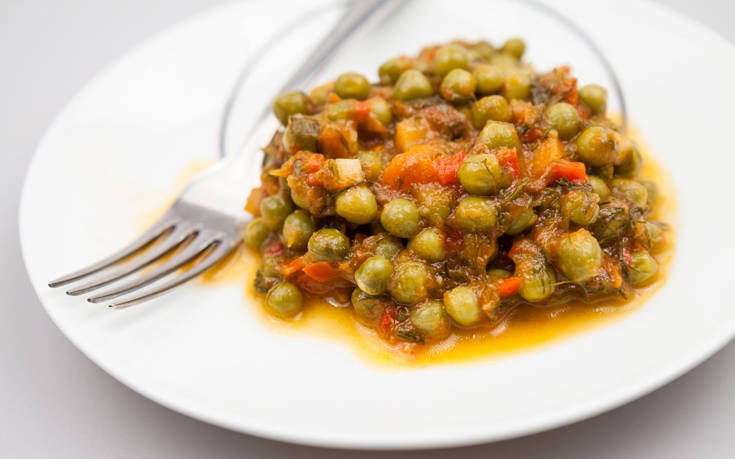
Αρακάς κοκκινιστός

Image result for Αρακάς κοκκινιστός
Υλικά για 4 άτομα
  • ½ κιλό αρακάς
  • 2-3 πατάτες μέτριες
  • 2 καρότα
  • ½ φλιτζ. ελαιόλαδο
  • 1 μικρό κρεμμύδι ψιλοκομμένο
  • 2 φρέσκα κρεμμυδάκια ψιλοκομμένα
  • 3/4 φλιτζ. χυμός ντομάτας
  • αρκετός άνηθος
  • αλάτι
  • πιπέρι
  • λίγη ζάχαρη
Εκτέλεση
  1. Αρχικά, καθαρίζετε τις πατάτες και τις κόβετε κυδωνάτες μικρού μεγέθους.
  2. Καθαρίζετε τα καρότα και τα κόβετε σε ροδελίτσες.
  3. Σε κατσαρόλα, ρίχνετε το ελαιόλαδο. Μόλις ζεσταθεί ρίχνετε τα κρεμμύδια και τα σοτάρετε.
  4. Προσθέτετε τα καρότα και τις ψιλοκομμένες πιπεριές. Ανακατεύετε και τα αφήνετε και αυτά να σοταριστούν.
  5. Κατόπιν προσθέτετε τον αρακά, τον σοτάρετε για λίγο και περιχύνετε με τον χυμό ντομάτας, τον άνηθο και αλατοπίπερο.
  6. Ρίχνετε λίγη ζάχαρη και ζεστό νερό, ίσα να σκεπάσει τον αρακά.
  7. Αφήνετε να βράσει σε σιγανή φωτιά, έως ότου μαλακώσουν τα λαχανικά και μείνει το φαγητό με το λαδάκι του.
     Image result for Αρακάς κοκκινιστός

    Αρακάς ή μπιζέλι; Όπως και να τον αποκαλέσουμε είναι το ίδιο! Αυτό που, μάλλον, μπορεί να μην γνωρίζουμε, είναι ότι –βάσει βοτανικής– ο λοβός του αρακά (τα πράσινα φυλλαράκια που στο εσωτερικό τους φιλοξενούν τους μικρούς αυτούς καρπούς), δεν θεωρείται λαχανικό, αλλά… φρούτο! Επίσης, ενώ πωλείται ως λαχανικό, δεν είναι ούτε αυτό! Ο αρακάς ανήκει στην κατηγορία των οσπρίων. Κοινό χαρακτηριστικό του με τα όσπρια, θα μπορούσαμε να πούμε πως είναι η αμυλώδης σύστασή του και, φυσικά, τα θρεπτικά συστατικά του όπως π.χ. η υψηλή περιεκτικότητά του σε πρωτεΐνες και υδατάνθρακες, η βιταμίνη C, το φυλλικό οξύ, αλλά και το μαγνήσιο – στοιχεία πολύτιμα για τον οργανισμό μας.
    Πότε τον φυτεύουμε;
    Ο αρακάς, δεν έχει κανένα πρόβλημα με τις χαμηλές θερμοκρασίες. Το αντίθετο μάλιστα. Γι’ αυτόν ακριβώς τον λόγο, μπορούμε να τον φυτεύσουμε τόσο το φθινόπωρο (Οκτώβριο-Νοέμβριο), όσο και στο τέλος του χειμώνα ή τις αρχές της άνοιξης (Φεβρουάριο-Απρίλιο). Ωστόσο, η προτίμησή του για τις χαμηλές θερμοκρασίες, δεν θα πρέπει να μας ξεγελάει… Βλέπετε, μπορεί να του αρέσει το κρύο, αγαπάει, όμως, και τον ήλιο, ενώ δεν θέλει πολύ αέρα. Το συμπέρασμα; Θα πρέπει να βρούμε ένα μέρος με αρκετή ηλιοφάνεια (κι ας έχει και σκιά κάποια στιγμή της ημέρας), το οποίο θα είναι προφυλαγμένο από τον αέρα. Τέλος, αν θέλουμε, μπορούμε να φυτέψουμε αρακά ακόμα και στο… μπαλκόνι μας! Σε γλάστρες μεσαίου μεγέθους (περίπου 20-25 εκ.) με υποστυλώματα ούτως ώστε να μπορεί ο αρακάς μας να αναρριχηθεί.
    Πότε είναι η εποχή του;
    Η άνοιξη, και συγκεκριμένα οι αρχές της, είναι η ιδανική εποχή για να καταναλώσουμε τον αρακά. Μάλιστα, πολλοί τον παίρνουν τότε (που βρίσκεται στην καλύτερη και πιο γλυκιά φάση του) και τον καταψύχουν, ούτως ώστε να μπορούν να τον γευτούν για αρκετό καιρό μετά. Φυσικά, στους πάγκους της λαϊκής, των μανάβικων και των σούπερ μάρκετ μπορούμε βρούμε τον φρέσκο αρακά έως τα μέσα του καλοκαιριού, ενώ… στους καταψύκτες, όλο τον χρόνο!
    Πώς επιλέγουμε τον καλύτερο;
    Επιλέγουμε πάντα τα πιο τρυφερά, τα πιο πράσινα και τα πιο μικρά «φασολάκια». Αυτά, σίγουρα θα κρύβουν μέσα τους τον γλυκό, γευστικό αρακά που αναζητάμε. Δεν θα πρέπει να έχουν χτυπήματα, η φλούδα τους προσέχουμε να μην είναι πολύ χοντρή και να μην έχει αρχίσει να χάνει το έντονο καταπράσινο χρώμα της (να μην έχει κιτρινίσει).
    Πώς τον χρησιμοποιούμε;
    Όλοι γνωρίζουμε τον αρακά σαν λαδερό φαγητό με καροτάκι, πατατούλες και ψιλοκομμένο άνηθο. Ο αρακάς, όμως, γίνεται και υπέροχος πουρές, ενώ μπορεί να συνδυαστεί και με το κρέας. Σε αυτή την περίπτωση, τον προσθέτουμε στο τέλος του μαγειρέματος (π.χ. τα τελευταία 15 λεπτά) – ειδικά αν είναι ολόφρεσκος και τρυφερός. Τέλος, σε αυτή την περίπτωση (αν, δηλαδή, τον έχουμε πετύχει ολόφρεσκο και τρυφερό), μπορούμε να τον απολαύσουμε ακόμα και ωμό μέσα στις σαλάτες μας.
    Μυστικά συντήρησης:
    Από τη στιγμή που ο αρακάς θα μπει στο ψυγείο, δεν έχει πολλές μέρες ζωής (αντέχει 2-3 μέρες το πολύ). Αντίθετα, στην κατάψυξη, μπορεί να κρατήσει έως και μισό χρόνο. Πως τον καταψύχουμε; Αφού αφαιρέσουμε τις καταπράσινες μπίλιες του, τον βάζουμε για 1-2 λεπτά σε ελαφρώς αλατισμένο νερό που βράζει, εν συνεχεία τον βάζουμε σε παγωμένο νερό μέχρι να κρυώσει, τον αφήνουμε να στεγνώσει και τον αποθηκεύουμε σε ειδικές σακούλες μέσα στην κατάψυξη.
    Διατροφική Ανάλυση:
      100 g  % RI
    Ενέργεια (kcal)  85 4
    Λιπαρά (g) 1.6 2
    εκ των οποίων κορεσμένα (g)  0.3 2
    Υδατάνθρακες (g) 8.1 3
    εκ των οποίων σάκχαρα (g) 1.1 1
    Φυτικές / Εδώδιμες Ίνες (g) 5.6 22
    Πρωτεΐνες (g)​ 6.7 13
    Αλάτι (g) 0 0


Γιουβέτσι με Μοσχαράκι Κοκκινιστό

ΝΤΡΟΜΑΚΑΣ - Μεζεδοπωλείο - Τρίκαλα

Μοσχαράκι Λεμονάτο


Μοσχάρι λεμονάτο. Μία εύκολη σπιτική και αγαπημένη συνταγή που αρέσει σε όλη την οικογένεια.

Υλικά
 
1 κιλό μοσχάρι (νουά ή ποντίκι)
3 κ.σ. ελαιόλαδο
1 σκ. σκόρδο
1 καρότο
1/2 κρεμμύδι
1 φλ. λευκό ξηρό κρασί
1 λεμόνι
1 πρέζα μοσχοκάρυδο
αλάτι
φρεσκοτριμμένο πιπέρι
1 κ.σ. κορν φλάουρ
σπάγκος μαγειρικής


Εκτέλεση
 
Για το λεμονάτο μοσχάρι, στεγνώνουμε πρώτα πολύ καλά το κρέας σε απορροφητικό χαρτί.

Αν θέλουμε, το δένουμε με σπάγκο για να κρατήσει το σχήμα του, ή ζητάμε από τον κρεοπώλη να το περάσει σε δίχτυ.
Ζεσταίνουμε το ελαιόλαδο και το ροδίζουμε για 10 λεπτά από όλες τις πλευρές.
Προσθέτουμε όλα τα λαχανικά ολόκληρα, τρίβουμε λίγο μοσχοκάρυδο. Σβήνουμε με το κρασί και αφήνουμε να εξατμιστεί κατά το ήμισυ.
Συμπληρώνουμε ζεστό νερό μέχρι να μισοσκεπάσουμε το κρέας. Σκεπάζουμε την κατσαρόλα και βράζουμε σε μέτρια φωτιά για περίπου 2 ώρες μέχρι να μαλακώσει καλά.
Κατά τη διάρκεια του βρασμού, γυρίζουμε το κρέας ώστε να βράσει ολοιόμορφα.
Αλατοπιπερώνουμε στο τέλος του βρασμού. Αφαιρούμε όλα τα λαχανικά.
Βγάζουμε το κρέας και το βάζουμε σε ξύλο κοπής. Αφαιρούμε τον σπάγκο ή το δίχτυ.
Κρατάμε 2 φλ. ζωμό στην άκρη για το ρύζι.
Διαλύουμε το κορν φλάουρ με το λεμόνι και το ρίχνουμε στη σάλτσα. Κόβουμε το κρέας σε φέτες και το ξαναβάζουμε στη σάλτσα. Βράζουμε σε χαμηλή φωτιά μέχρι ελαφρά να πυκνώσει η σάλτσα.

Tuesday

Greek Traditional Turkey with Chestnut and Pine Nut Stuffing


Image result for Greek Traditional Turkey with Chestnut and Pine Nut Stuffing


Ingredients


 2/3 cup butter
 1 cup chestnuts
 1/4 cup orange juice
1/4 cup tangerine juice
2/3 cup lemon juice
1 (10 pound) whole turkey
salt and ground black pepper to taste
1/2 pound ground beef
1/2 pound ground pork
 1/4 cup chopped onion
1/2 cup uncooked instant rice
1/4 cup pine nuts
1/4 cup raisins (optional)
1/3 cup butter
1/2 cup chicken broth
2 tablespoons brandy
1 teaspoon salt
1/2 teaspoon ground black pepper


Directions


  1. Preheat oven to 325 degrees F (165 degrees C).
  2. Make a small incision on sides of each chestnut, and place in a skillet over medium heat. Cook, stirring often, until toasted. Remove from heat, peel, and chop.
  3. Melt 2/3 cup butter in a saucepan, and mix in the orange juice, tangerine juice, and lemon juice. Rub the turkey inside and out with the mixture, reserving some for basting. Season turkey with salt and pepper.
  4. In a large skillet over medium heat, cook the ground beef, ground pork, and onion until beef and pork are evenly brown and onion is tender. Drain grease. Mix in the rice. Stir in the chestnuts, pine nuts, raisins, 1/3 cup butter, broth, and brandy. Season with 1 teaspoon salt and 1/2 teaspoon pepper. Continue cooking until all liquid has been absorbed. Stuff all turkey cavities with the mixture, and tie in place with kitchen twine.
  5. Place turkey on a rack in a roasting pan, and loosely cover breast and thighs with aluminum foil. Pour about 1/4 inch water into the bottom of the pan. Maintain this level of water throughout cook time. Roast turkey in the preheated oven 3 to 4 hours, brushing occasionally with remaining butter and juice mixture. Increase oven temperature to 400 degrees F (200 degrees C) during final hour of roasting, and remove foil. Cook turkey to a minimum internal temperature of 180 degrees F (82 degrees C).


Nutrition Facts


Per Serving: 930 calories; 52.2 22.3 86.1 322 572 Full nutrition

Monday

Chaniotiko Boureki: Cretan Veggie Pie recipe


  Σήμερα φτιάχνουμε μπουρέκι χανιώτικο!! - Η "μαγική" συνταγή της Κρήτης! -  Συνταγές - Athens magazine

Boureki is a delicious Cretan veggie pie and here is our traditional recipe on how to make it

Ingredients

POTATOES 35oz / 1kg
ZUCCHINI 35oz / 1 kg
TOMATOES 8oz / 250gr
SPRING ONIONS 4pcs
MIZITHRA 17oz / 500gr
GRAVIERA 8oz / 250gr
MINT
PARSLEY
OLIVE OIL
EGGS 2
MILK 10fl oz / 350ml
FLOUR
SALT & PEPPER
Procedure
  • Cut all the vegetables in round pieces.
  • Sprinkle some olive oil at the bottom of a roasting pan and place a layer of potatoes and season them. On top of the potatoes place a layer of zucchini, season them and sprinkle them with some flour.
  • Grade both mizithra and graviera and sprinkle half of the quantity on top of the zucchini. Sprinkle all the spring onions, mint and parsley according to your taste.
  • Place a layer of potatoes, season them and then place the tomatoes and season them.
  • Then again place a layer of zucchini. On top of them sprinkle the rest of both cheeses and sprinkle them with mint and parsley.
  • In a bowl whisk the eggs and the milk and pure the mixture on top of the veggies. Drizzle some olive oil on top.
  • Bake in a preheated oven at 330F (165C) for 45-50 minutes.

Apple Strudel Puff Pastry

​Makes 2 Braids:

2 (9 oz) puff pastry sheets, thawed and chilled in the refrigerator
Egg wash: 2 egg yolks plus 2-3 tablespoons water

Apple filling:
5 apples (combination gala and granny smith) peeled, cored, and cubed
4 tablespoons unsalted butter
½ cup light brown sugar
¼ cup granulated sugar
3 heaping teaspoons corn starch
​1 heaping teaspoon ground cinnamon
¼ teaspoon salt
Optional: 1 teaspoon orange zest, ½ cup dried cranberries or raisins, 1/3 cup chopped pecans or walnuts


Begin by making the apple filling. In a large, shallow saucepan melt butter and add apples. Add the brown sugar, white sugar, cornstarch, salt and cinnamon. Mix well and cook over high heat for a few minutes while constantly stirring to break up the sugar and combine all of the ingredients. Once the apples release some juices and the sauce begins to thicken it is ready. Do not overcook or the apples will break down and become mushy. Keep in mind that they will continue to cook in the oven. Cool completely.

Preheat the oven to 400 °F, 200 °C.

Lightly dust your work surface with some all-purpose flour. Roll out each puff pastry to a 12” by 15” rectangle. Place each puff pastry sheet on a baking tray lined with parchment paper.
Make an even number of diagonal cuts down each side (approx. 1 inch apart) of the rectangle.

Divide the apple filling equally between the two pastries and spread the mixture down in the center of each puff pastry.

Fold the diagonal strips of dough in a criss-cross pattern over the apple filling, forming a braid.
Press the ends together to seal the top and bottom.

Brush with the egg wash and sprinkle with sugar over the top of the pastries.

Bake in the center rack of the oven until puffed and golden brown. About 30-35 minutes.
Allow to cool completely before serving.

Make ahead tips:
  • The apple filling can be prepared 1 week ahead of time and stored in an air tight container in the refrigerator.
  • The puff pastry braid can be assembled, chilled in the freezer until firm then wrapped with parchment paper and foil until ready to bake.
  • This pastry can be frozen (unbaked) up to 3 weeks.
  • When ready to bake, brush with egg wash, sprinkle with sugar and bake until puffed and golden. About 45-50 minutes.


Greek Traditional Stuffed Turkey


Here’s a great traditional Greek stuffed recipe that will please everybody on the table.


Ingredients 

TURKEY 140oz / 4kg
BUTTER 3oz / 100gr
ORANGE JUICE 2fl oz / 70ml
LEMON JUICE 2fl oz / 70ml
MANDARIN JUICE 2fl oz / 70ml
MUSTARD 1oz / 35gr
HONEY 1tbsp
ROSEMARY
SALT, PEPPER
CARROT 1
ONION 1
CELERY 1
For the stuffing
CHESTNUTS 7oz / 200gr
PINENUTS 2oz / 70gr
GROUND BEEF 10oz / 350gr
CHICKEN LEAVER 4oz / 150gr
ONION 1 large
RICE 3oz / 100gr
BUTTER 2oz / 70gr
CHICKEN BROTH 4fl oz / 150ml
BRANDY 2fl oz / 70ml
RAISINS 2oz / 50gr
BREAD CRUMBS 2oz / 50gr
ROSEMARY, SALT & PEPPER

Procedure

For the stuffing
  • Place a deep pan over high heat and cook the ground beef, and chicken leaver until they get a nice brown color.
  • Add the onion and continue sautéing for another 5 minutes.
  • Add the chestnuts, pine nuts, raisins, rice and cook for 2-3 minutes.
  • Pure the brandy and wait for the alcohol to evaporate. Mix in the butter and stir.
  • Add the chicken broth, rosemary, salt and pepper and remove from heat.
For the turkey
  • Melt 3oz butter in a saucepan, and mix in the orange juice, tangerine juice, lemon juice, mustard and honey. Rub the turkey inside and out with the mixture, reserving some for basting. Season turkey with salt and pepper.
  • In a roasting pan place some onions, carrots and celery at the bottom and place the turkey on top of them. Stuff all turkey cavities with the mixture.
  • Cover with aluminum foil and bake in a preheated oven at 370 F (170 C) for two hours then uncover the turkey and continue cooking for one more hour. Increase temperature at 392F (200 C) for the last hour.
  • Serve and enjoy.