Saturday

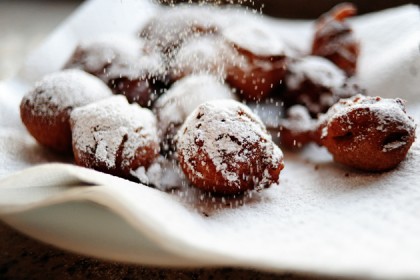
Greek Style Apple Fritters

15 Minutes
DIFFICULTY:
Easy
COOK TIME:
10 Minutes
SERVINGS:
8 Servings
  • FRITTERS
  • 2 cups All-purpose Flour
  • 1/2 cup Sugar
  • 3 Tablespoons Sugar
  • 2-1/4 teaspoons Baking Powder
  • 1-1/4 teaspoon Salt
  • 2 teaspoons Ground Cinnamon
  • 2 whole Large Eggs
  • 3/4 cups Whole Milk
  • 2 teaspoons Vanilla Extract
  • 2 Tablespoons Melted Butter
  • 2 whole Granny Smith Apples, Peeled And Diced
  • Powdered Sugar (optional, For Dusting)
  • GLAZE (optional)
  • 1-1/2 cup Powdered Sugar
  • 1/4 teaspoon Salt
  • 1/4 teaspoon Vanilla
  • 1/4 cup Milk
In a mixing bowl, combine flour, sugar, baking powder, cinnamon, and salt.

In a separate bowl, beat the eggs with a fork, then add milk, melted butter, and vanilla.

Gently fold dry and wet ingredients together until just combined (do not overmix.) Fold in apples. Add enough apples to make a very chunky batter. You want the apples to shine though!

Heat a couple of inches of canola oil over medium to medium-low heat. When it gets hot, drop a little drop of batter into the oil. If it sizzles immediately and rises to the top, the oil is ready; if it burns quickly, turn down the heat.

Drop teaspoons of batter into the hot oil, six or eight at a time. Sometimes they'll flip over by themselves; sometimes you have to flip them. Just watch them and make sure they don't get too brown, but cook them long enough to make sure the batter's cooked through, about 2 to 2 1/2 minutes total.

Remove and drain on a paper towel. Dust very generously with powdered sugar, or dip fritters in a light doughnut glaze (mix all glaze ingredients together, then dunk warm fritters).

Serve warm!

**May be heated up the next day in a 350 degree oven for 8 minutes.

___________________________________

Step by Step Instructions 

Here’s what you need: apples, flour, cinnamon, sugar, whole milk, butter, baking powder, salt, vanilla, and eggs.
Before you begin, add a couple of inches of canola oil to a pot or dutch oven, and heat it over medium to medium-low heat.
 
TPW_9233In a bowl, combine the flour, sugar, baking powder, cinnamon, and salt.
 
 
TPW_9234Whisk them together to combine.
 
 
TPW_9235Peel two or three apples…
 
 
TPW_9249Then slice them…
 
 
TPW_9251And dice them. Keep the chunks on the small side so the apples have a chance to cook.
 
 
TPW_9237In a separate bowl, crack two eggs…
 
 
TPW_9240Beat them with a fork…
 
 
TPW_9243Add the vanilla…
 
 
TPW_9248And mix it together.
 
 
TPW_9254Pour the egg mixture and the milk into the dry ingredients…
 
 
TPW_9257And fold it together gently, until it’s not quite combined.
 
 
TPW_9258Next, add 2 to 3 tablespoons melted butter…
 
 
TPW_9261And the apples…
 
 
TPW_9264And fold together gently. It’s ready to go! If the batter doesn’t look chunky enough, by all means add more apples. You want the apples to shine through!
 
 
TPW_9276Now, to test the oil, I drop a tiny bit of batter into the oil. If it sizzles and rises to the top immediately, the oil is ready. If it immediately browns and starts to burn, however, you need to decrease the heat a bit!
 
 
TPW_9278Aww. What a cute little test fritter.
I wonder…does the test fritter even know that it’s just a test fritter?
I know I’m not going to be the one to tell him after all he’s gone through.
 
TPW_9273To make neat, round fritters, I use this little number.
I love these scoops, and they come in pretty much every size under the sun. They’re handy for so many different things!
 
TPW_9281Scoop…
 
 
TPW_9285Drop…
 
 
TPW_9287And it rises to the top and immediately begins browning. But not violently browning…just slow and steady.
 
 
TPW_9291This one actually flipped over on its own. It happens sometimes.
 
 
TPW_9292And a little under two minutes later, I took it out. You have to watch the fritters the whole time, just to make sure they don’t burn.
Now, the round shape above is cute and neat and all, but if the balls are too big, the batter in the very center will still be runny by the time you have to remove them from the oil. So make sure you don’t scoop too much batter at a time. Keep them small!
 
 
TPW_9297Another option is to use a regular teaspoon…
 
 
TPW_9299And drop them in.
 
 
TPW_9320Or, if you like more wacky shapes and more surface area, drag the spoon as you’re dropping the batter into the oil. This results in a flatter fritter.
Flatter fritter. Say that ten times.
 
 
TPW_9311Remove the fritters from the oil and let them drain on a paper towel.
 
 
TPW_9502They should be crispy, crispy, crispy!
 
 
TPW_9507My favorite thing to do is immediately dunk the fritters, coating them thoroughly, in the simple glaze I use to coat my Homemade Glazed Doughnuts. I think it somehow anchors in the wonderful flavor and texture of the fritters, and gives them more of a doughnut quality.
 
 
TPW_9522But an easier/quicker approach, of course…
 
 
TPW_9532Is a very generous dusting of powdered sugar. Yum!
 
 
TPW_9534
 
 
TPW_9519Mmmm. Perfect! The fritter is done all the way through, and there’s plenty of apple in there to make it extra delicious.
Do NOT skeemp on zee apples!
 
 
TPW_9552And don’t skimp on the fritters! Make a ton—you can heat them up the next morning in a 350-degree oven for 8 to 10 minutes, and they’re totally delicious…maybe even more so.
Enjoy!


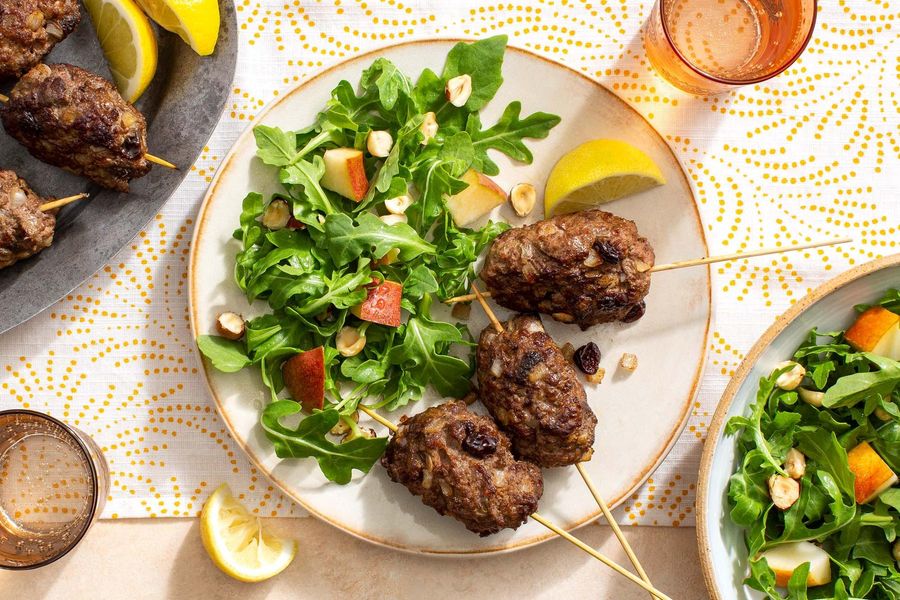
Beef skewers with arugula-pear salad and hazelnuts

Greek beef skewers with arugula-pear salad and hazelnuts


Instructions


2-serving instructions


Wash produce before use

1 .Make and cook the beef skewers

Peel and finely chop enough onion to measure ½ cup (1 cup).
Cut a small corner from the ground beef packaging and drain off any excess liquid. Transfer to a plate; pat dry with a paper towel.
In a large bowl, combine the onion, ground beef, raisins, and Greek spice blend. Season generously with salt and pepper and mix gently until just combined. Using wet hands, form the mixture into 6 (12) ovals, each about ¾ inch thick; thread each onto a wooden skewer. In a large frying pan over medium heat, warm 1 tablespoon (2 TBL) oil until hot but not smoking. Add the beef skewers and cook, turning occasionally, until browned and cooked through, 2 to 4 minutes per side. Transfer to a plate.
While the beef skewers cook, prepare the salad.

2 .Make the arugula-pear salad

Core and cut the pear into 1-inch pieces.
Using the bottom of a bowl or cup, lightly crush the hazelnuts.
Cut the lemon into wedges for garnish. (Cut 1 lemon into wedges; save the remaining lemon for another use.)
In a large bowl, toss together the arugula, pear, hazelnuts, and 1 to 2 teaspoons oil. Season to taste with salt and pepper.

Serve

Transfer the beef skewers and arugula-pear salad to individual plates. Serve with the lemon wedges.


Kids Can!

Measure the onion.
Crush the hazelnuts.
Assemble the arugula-pear salad.

Sunday

Top 5 Favorite Koulourakia Recipes for Easter


Koulourakia for Pascha are a traditional favorite and are always a centerpiece of the dessert table at the Easter feast. The stacks and stacks of koulouria made with love are a special treat after the fasting of Great Lent. The following recipes are some of our most requested over the years. The variations are endless with classic Greek flavorings including orange, masticha, and cinnamon. The tradition of making koulourakia goes back well before Christianity. The Minoans in Ancient Crete made snake-shaped koulourakia reflecting the healing power of snakes that were part of their religious practice. In more recent Greek tradition, typical Easter koulourakia shaped like twists are flavored with vanilla. Orange flavored koulourakia are also particularly popular. The orange juice and orange zest impart a fresh, fragrant essence to these tasty cookies.

Koulourakia tis Lambris (Easter Cookies)
1 pound unsalted butter (4 sticks), at room temperature
2 cups sugar
10 large eggs, at room temperature
1 cup milk
2 cups vegetable oil
3 tablespoons, plus 1 teaspoon baking powder
1 teaspoon pure vanilla extract
1 shot glass cognac
5 pounds unbleached, all-purpose flour
4-5 large eggs, or more for egg wash
In the bowl of a mixer with the paddle attachment, cream the butter and sugar, then add the eggs one at a time, beating well after each addition. Add the baking powder, vanilla, milk, oil, and cognac and beat well. Lower the mixer speed and add the flour slowly, as much as the butter mixture will take to form a dough that doesn’t stick to your fingers and can be rolled into koulourakia shapes. You may have to mix in the last bit of flour by hand, and be careful not to add too much flour, or over-beat or over-handle the dough since the results will be tough cookies. To make shapes, take about a teaspoonful of dough and roll it into a ball, then roll between your hands or on a flat surface to form a strip 3-4 inches long, then twist to form the traditional koulouraki shape. If preferred, you can make the shapes larger and make an additional twist, but be advised, the koulourakia do puff up, so leave at least an inch or two around them when you place them on an ungreased cookie sheet. Continue making the koulourakia shapes and placing them on cookie sheets. Preheat the oven to 350 degrees. In a small bowl, beat one to two of the eggs for the egg wash and brush the koulourakia before placing in the lower third of the oven and baking for about 10 minutes until the koulourakia are puffed up and just beginning to color around the edges. Remove from the oven, brush the koulourakia with additional egg wash, and return them to the upper rack of the oven, rotating the pans, to finish baking for another 10 minutes or until the koulourakia are golden brown. Set the koulourakia to cool on the cookie sheet on a wire rack for 5-10 minutes and then remove them from the cookie sheet and allow to cool completely on wire racks before storing in an airtight container. If desired, different shapes can be made with this dough, such as rings or s-shaped coils, brush with egg wash and bake as directed above.

Koulourakia with Orange Flavor
1 pound sweet butter
1 cup Greek extra virgin olive oil
2 cups sugar
1 cup orange juice
5 eggs
1 teaspoon pure vanilla extract
2 teaspoons finely grated orange zest
2 tablespoons baking powder
3-4 pounds all-purpose, unbleached flour
2-3 eggs for the egg wash
Sesame seeds (optional)
In the bowl of a stand mixer with the paddle attachment, cream the butter with the oil and the sugar. Add the orange juice, vanilla, orange zest, and the eggs one at a time beating well after each addition. Lower the mixer speed and add the baking powder and the flour gradually. You may need to incorporate the remaining flour by hand depending on the size of your mixer. Add as much flour as needed to make a dough that doesn’t stick to your fingers and can be made into cookie shapes. Roll the dough into cookie twists, the traditional shape for koulourakia, but circles, S-shapes and figure eights can also be made. Place the cookie shapes on ungreased baking sheets an inch or two apart since the koulourakia will puff up. In a small bowl, beat the eggs for the egg wash. Brush the koulourakia with the egg wash, and if preferred, sprinkle with some sesame seeds on top, and bake in a preheated 350-degree oven for about twenty minutes until golden brown, rotating the pans from the lower to the upper rack and brushing again with egg wash about half way through the baking process. Cool on the baking sheets on wire racks for a few minutes then transfer to wire racks to cool completely before serving or storing in an airtight container.

Smyrneika Koulouria
5 cups unbleached all-purpose flour
1 teaspoon salt
3⁄4 cup sugar
6 ounces butter, melted
3 ounces milk, lukewarm
1 teaspoon baking soda
2 eggs, beaten
1 tablespoon vanilla extract
1 beaten egg white
Sift the flour in a large bowl, make a well in the center, and add melted butter, eggs, salt, sugar, and vanilla. Dissolve baking soda in the milk and add to the flour mixture.
Knead the dough until you have a soft, pliable dough. Shape dough into s-shapes, braids, and snails. Place on a greased baking sheet and brush with beaten egg white. Bake in a preheated 350-degree oven for 20 minutes, rotating the baking sheets about half way through the baking process. Cool completely on wire racks before serving or storing in an airtight container.

Koulourakia me Krasi (Wine Cookies)
3 and 1/2 cups unbleached, all-purpose flour
1 teaspoon baking powder
1/2 teaspoon baking soda
1/2 teaspoon salt
1/2 cup sugar
1/2 cup sesame seeds
1 cup Greek extra virgin olive oil
1/2 cup dry white wine
Additional sesame seeds, if desired
In a large mixing bowl, whisk together the flour, baking powder, baking soda, salt, sugar, and sesame seeds. Make a well in the center and add the oil and white wine. Stir until just combined. Form one to two-inch cookie shapes, and place on ungreased baking sheets about one inch apart. If desired, roll the cookies in additional sesame seeds before placing on the baking sheets. Bake in a preheated 350-degree oven for about 20 minutes or until lightly golden, rotating the pans to ensure even baking. Cool completely on wire racks before serving or storing in an airtight container or cookie jar. If preferred, lightly toast the sesame seeds on a baking sheet in a preheated 350-degree oven for a few minutes before adding to the flour mixture for a more robust, nutty flavor.

Koulourakia Methismena (Drunk Cookies)
3 and 1/4 cups unbleached, all-purpose flour
1 teaspoon baking powder
1/2 teaspoon salt
1/2 teaspoon cinnamon
3/4 cup Greek extra virgin olive oil
1/2 cup sugar
1/2 cup sweet red wine, Mavrodaphne
1/4 cup cognac, Metaxa
1 teaspoon pure vanilla extract
In a large mixing bowl, whisk together the flour, baking powder, salt and cinnamon. In a separate bowl, whisk together the sugar, oil, wine, cognac, and the vanilla. Pour the wet ingredients into the dry and stir until just combined. Take a scant tablespoon of the dough, roll into strips, and then form circles or other cookie shapes. Place on ungreased cookie sheets and bake in a preheated 350-degree oven for about 20 minutes until the cookies are lightly golden brown, rotating the pans about halfway through the baking. Cool completely on wire racks before serving or storing in an airtight container or cookie jar.

Κουλουρακια πασχαλινα της Ολγας Κεφαλογιαννη


Υλικα
Primis Player Placeholder
  • 400 γρ αλεύρι για όλες τις χρήσεις
  • ½ κ.γ μπέικιν πάουντερ
  • 80 γρ. βούτυρο αγελάδας σε θερμοκρασία δωματίου
  • 120 γρ. άχνη ζάχαρη
  • 1 πρέζα αλάτι
  • 75 γρ. γάλα φρέσκο, πλήρες
  • 2 τεμ. αυγά και 1 επιπλέον για άλειμμα
Εκτέλεση
Βάζουμε όλα τα υλικά -εκτός από το αυγό για την επάλειψη- στον κάδο του μίξερ και τα ζυμώνουμε με το γάντζο για αρκετή ώρα. Εναλλακτικά, ζυμώνουμε με τα χέρια. Μόλις γίνει ένα ομοιογενές ζυμάρι, το σκεπάζουμε και το αφήνουμε να ξεκουραστεί στο ψυγείο για 1 ώρα. Πλάθουμε μακρόστενα μπαστούνια μήκους 14 εκ. και πάχους 1 εκ., τα διπλώνουμε στη μέση και τα στρίβουμε σε πλεξούδα. Τα τοποθετούμε στη λαμαρίνα του φούρνου, πάνω σε λαδόκολλα. Χτυπάμε το αυγό μαζί με 1 κ.σ. νερό ή γάλα και αλείφουμε τα κουλούρια. Τα ψήνουμε σε προθερμασμένο φούρνο στους 160°C για 20-25 λεπτά έως ότου ροδίσουν.

Saturday

Kokoretsi-- Κοκορετσι

Εκτός από το αρνάκι, για να εμπλουτίσετε το γιορτινό σας τραπέζι, μπορείτε να φτιάξετε και κοκορέτσι στον φούρνο. Το κοκορέτσι αποτελεί άλλωστε τον νούμερο ένα παραδοσιακό μεζέ για το Πάσχα. Αντί για την σούβλα μπορείτε να ακολουθήσετε τις συνταγές γνωστών σεφ για να έχετε ένα ανάλογο αποτέλεσμα και στον φούρνο.

Κοκορέτσι στον φούρνο από τον ΓιώργοΤσούλη

ΥΛΙΚΑ

1 κιλό αρνίσια συκωταριά
1 κιλό αρνίσιο έντερο
2 αρνίσιες μπόλιες, μικρές
Χυμό από 2 λεμόνια
2 σκ. σκόρδο, ψιλοκομμένες
2 κ.σ. θυμάρι, ξερό
1 κ.σ. ρίγανη, ξερή
Αλάτι
Πιπέρι
Ελαιόλαδο

ΠΡΟΕΤΟΙΜΑΣΙΑ & ΕΚΤΕΛΕΣΗ 

1.Πλένουμε πολύ καλά το έντερο, το μεταφέρουμε σε ένα μπολ με νερό, αδειάζουμε το χυμό από ένα λεμόνι και το αφήνουμε για μία μέρα. Αφού μουλιάσει για μία μέρα, σουρώνουμε και στραγγίζουμε πολύ καλά το έντερο και το αφήνουμε στην άκρη.
2.Κατόπιν, πλένουμε και στεγνώνουμε πολύ καλά τη συκωταριά, την κόβουμε σε μικρά κυβάκια 5Χ5εκ. και την αδειάζουμε σε ένα μπολ.
3.Ύστερα, αλατοπιπερώνουμε, προσθέτουμε το σκόρδο, το θυμάρι, το χυμό από ένα λεμόνι τη ρίγανη, λίγο ελαιόλαδο, ανακατεύουμε με τα χέρια μας και αφήνουμε στην άκρη.
4.Στη συνέχεια, παίρνουμε ξυλάκια για σουβλάκια και περνάμε τη συκωταριά
5.Έπειτα, ανοίγουμε τις μπόλιες και τυλίγουμε το κάθε κοκορέτσι με αυτές.
6.Αμέσως μετά, παίρνουμε το έντερο και κάνουμε ένα μικρό κόμπο στο κάτω μέρος από το ξυλάκι. Τυλίγουμε σφιχτά το έντερο γύρω από τη συκωταριά. Την ίδια διαδικασία ακολουθούμε και για τα υπόλοιπα ξυλάκια.
7.Κατόπιν, στρώνουμε ένα ταψί του φούρνου με λαδόκολλα, τοποθετούμε πάνω του μία σχάρα και μεταφέρουμε πάνω της τα ξυλάκια.
8.Ύστερα, αλατοπιπερώνουμε τα κοκορέτσια και τυλίγουμε καλά όλο το ταψί με αλουμινόχαρτο.
9.Τέλος, ψήνουμε τα κοκορέτσια σε προθερμασμένο φούρνο στους 200°C στις αντιστάσεις πάνω–κάτω για 50-55 λεπτά περίπου. Αμέσως μετά, αφαιρούμε τη λαδόκολλα και ψήνουμε εκ νέου για να πάρει χρώμα το κρέας.
10.Μόλις είναι έτοιμα τα κοκορέτσια, τα σερβίρουμε ζεστά μαζί με σαλάτα της αρεσκείας μας. 


Κοκορέτσι στον φούρνο από τον Άκη Πετρετζίκη
Συστατικά
  • 2 κιλά αρνί, εντεράκια
  • 50 γρ. ξίδι
  • αλάτι
  • 1 μπόλια, αρνίσια
  • 1 συκωταριά, αρνίσια με γλυκάδια
  • 3 σκ. σκόρδο
  • 2 κ.σ. θυμάρι, ξερό
  • 2 κ.σ. δεντρολίβανο
  • 1 κ.σ. μπούκοβο
  • 2 κ.σ. ρίγανη
  • ξύσμα λεμονιού, από 2 λεμόνια
  • χυμό λεμονιού, από 2 λεμόνια
  • πιπέρι
Μέθοδος Εκτέλεσης
  • Πλένουμε πολύ καλά τα εντεράκια μέσα-έξω.
  • Τα βάζουμε σε λεκάνη με το ξύδι και το αλάτι και τα αφήνουμε για 10 λεπτά.
  • Ξεπλένουμε πολύ καλά, τα σουρώνουμε και τα βάζουμε σε ένα μπολ και φυλάσσουμε στο ψυγείο για 1-2 ώρες.
  • Παράλληλα βάζουμε σε ένα μπολ την μπόλια με ζεστό τρεχούμενο νερό, ξεπλένουμε καλά και την αφήνουμε στο μπολ με νερό και το χυμό λεμονιού για 30 λεπτά
  • Στραγγίζουμε και αφήνουμε στην άκρη.
  • Πλένουμε καλά τη συκωταριά, τα γλυκάδια και τα κόβουμε σε κομμάτια 4-5 εκ.
  • Τα βάζουμε σε ένα μπολ με το θυμάρι, το δεντρολίβανο, το μπούκοβο, τη ρίγανη, το ξύσμα από 2 λεμόνια και το πιπέρι (αλάτι δεν βάζουμε από την αρχή γιατί θα μας σφίξει το κρέας). Αφήνουμε για 1 ώρα να μαριναριστούν.
  • Προθερμαίνουμε τον φούρνο στους 200° C στον αέρα.
  • Παίρνουμε 2 σούβλες μεταλλικές των 30 εκατοστών.
  • Περνάμε από τη σούβλα τα κομμάτια της συκωταριάς εναλλάξ ως εξής: πνευμόνια, καρδιά, συκώτι, γλυκάδια και αλατοπιπερώνουμε.
  • Παίρνουμε και κόβουμε ένα κομμάτι μπόλιας ώστε να μας καλύψει όλη τη σούβλα και τυλίγουμε ομοιόμορφα από πάνω από το κρέας.
  • Περνάμε τα εντεράκια και τα τυλίγουμε πάνω από την μπόλια τα σφίγγουμε καλά πάνω στην άκρη της σούβλας (θέλει υπομονή και αρκετό εντεράκι).
  • Τυλίγουμε με μία λαδόκολλα και αλουμινόχαρτο και τοποθετούμε σε ένα ταψάκι με σχάρα και ψήνουμε στον φούρνο για 45 λεπτά.
  • Ανοίγουμε το αλουμινόχαρτο και την λαδόκολλα και αφήνουμε για άλλα 20 λεπτά για να πάρει χρώμα.

Friday

Παραδοσιακά πασχαλινά κουλούρια

 Παραδοσιακά πασχαλινά κουλούρια

Υλικά

  • 300 γρ. βούτυρο σε θερμοκρασία δωματίου
  • 200 γρ. ζάχαρη
  • 2 κρόκους αυγού
  • χυμό από 2 πορτοκάλια
  • 1 κ.γ. μπέικιν πάουντερ
  • 100 γρ. γάλα
  • 1 κ.σ. κονιάκ
  • 1 κ.γ. εκχύλισμα βανίλιας,
  • 800 γρ. αλεύρι
  • 1 κρόκος αυγού αραιωμένο σε λίγο νερό για το άλειμμα

Εκτέλεση

  1. Προθερμαίνετε το φούρνο στους 180οC στον αέρα.
  2. Στον κάδο του μίξερ βάζετε το βούτυρο σε κομμάτια, τη ζάχαρη και χτυπάτε με το φτερό για 3-4 λεπτά μέχρι να αφρατέψουν και να ασπρίσουν.
  3. Προσθέτετε τους κρόκους έναν έναν και συνεχίζετε το χτύπημα.
  4. Περιμένετε να ενσωματωθεί ο ένας κρόκος μέχρι να ρίξετε τον επόμενο.
  5. Αναμειγνύετε τον χυμό πορτοκάλι με το μπέικιν πάουντερ και τα ρίχνετε μέσα στο μίξερ.
  6. Τέλος προσθέτετε το γάλα, το κονιάκ, το εκχύλισμα βανίλιας και τα χτυπάμε για 3 λεπτά μέχρι να ενσωματωθούν όλα τα υλικά.
  7. Αφαιρείτε τον κάδο από το μίξερ και προσθέτετε το αλεύρι.
  8. Ανακατεύετε με μια μαρίζ και όταν δείτε ότι αρχίζει να σας δυσκολεύει πλάθετε με τα χέρια μέχρι η ζύμη να είναι αφράτη και εύπλαστη.
  9. Τοποθετείτε τη ζύμη στον πάγκο εργασίας και την αφήνετε για 5 λεπτά να ξεκουραστεί.
  10. Στη συνέχεια πλάθετε κουλουράκια σε διάφορα σχέδια και τα τοποθετείτε σε ταψάκια 30×40 εκ. στρωμένα με λαδόκολλα.
  11. Αλείφετε τα κουλούρια με τον κρόκο αραιωμένο με νερό. Ψήνετε για 18-20 λεπτά.

Καρυδόπιτα-Greek Walnut Cake

Υλικά

  • 10 αυγά, χωριστά οι κρόκοι από τα ασπράδια
  • 10 κουτ. σούπας ζάχαρη λευκή
  • 10 κουτ. σούπας καρύδι, χοντροτριμμένο
  • 10 κουτ. σούπας φρυγανιά, τριμμένη
  • 1 κουτ. γλυκού κανέλα, σε σκόνη
  • 1 κουτ. γλυκού σόδα μαγειρική
  • 1/2 κουτ. γλυκού μοσχοκάρυδο, σε σκόνη
  • ξύσμα από 1 λεμόνι
  • 40 ml μπράντι
  • 2 κουτ. σούπας βούτυρο αγελάδος, για το ταψί
Για το σιρόπι
  • 3 ποτήρια νερού ζάχαρη
  • 3 ποτήρια νερού νερό
  • 1 λεμόνι βιολογικό, ακέρωτο, καλά πλυμένο και κομμένο στη μέση

Διαδικασία

Χτυπάμε στη μεσαία ταχύτητα του μίξερ, με το σύρμα, τους κρόκους και τη ζάχαρη μέχρι να ασπρίσουν. Χτυπάμε χωριστά τα ασπράδια μέχρι να έχουμε μια σφιχτή μαρέγκα. Σε ένα μπολ ανακατεύουμε το καρύδι, τη φρυγανιά, την κανέλα, τη σόδα, το μοσχοκάρυδο, το ξύσμα και το ποτό. Προσθέτουμε το μείγμα κρόκων-ζάχαρης, ανακατεύουμε καλά με ελαστική σπάτουλα και προσθέτουμε και τη μαρέγκα. Ανακατεύουμε με απαλές κινήσεις, για να μην ξεφουσκώσει μέχρι να ενσωματωθεί. Προθερμαίνουμε τον φούρνο στους 180°C και βουτυρώνουμε ένα ταψί διαμέτρου 28 εκ. Μεταφέρουμε το μείγμα στο ταψί, το απλώνουμε ομοιόμορφα και ψήνουμε για περίπου 45 λεπτά, μέχρι να ροδίσει. Ελέγχουμε αν έχει ψηθεί καλά, βυθίζοντας στο κέντρο του ταψιού μια οδοντογλυφίδα. Αν βγαίνει καθαρή χωρίς υπολείμματα ζύμης, η καρυδόπιτα είναι έτοιμη. Αποσύρουμε από τον φούρνο και την αφήνουμε να γίνει χλιαρή. Βάζουμε τα υλικά του σιροπιού σε ένα κατσαρολάκι και τα αφήνουμε να πάρουν μία βράση. Αφαιρούμε το λεμόνι και ρίχνουμε το καυτό σιρόπι στη ζεστή καρυδόπιτα. Αφήνουμε να ποτίσει καλά και να κρυώσει πριν τη σερβίρουμε.

Μελαχρινή (καρυδόπιτα αξιώτικη) Greek Walnut Cake

Υλικά


  • 1½ φλιτζ. τσαγιού ζάχαρη
  • 1/2 κιλό σιμιγδάλι ψιλό
  • 1 φλιτζ. τσαγιού παξιμάδι ή φρυγανιά, τριμμένα
  • 1/2 κουτ. γλυκού κανέλα ή γαρίφαλο, σε σκόνη
  • 1 κουτ. γλυκού μπέικιν πάουντερ
  • 1 κουτ. γλυκού σόδα μαγειρική
  • 50 ml ρακή
  • 250 γρ. βούτυρο αγελαδινό, σε θερμοκρασία δωματίου (+ λίγο ακόμη για το ταψί)
  • 5 αυγά (χωριστά οι κρόκοι από τα ασπράδια)
  • 1 ποτήρι ψίχα καρυδιού, κοπανισμένη
  • 1½ ποτήρι γάλα

Για το σιρόπι

  • 4 φλιτζ. τσαγιού ζάχαρη
  • 3 φλιτζ. τσαγιού νερό
  • 2 -3 κουτ. σούπας χυμός λεμονιο


Διαδικασία


Καρυδόπιτα: Προθερμαίνουμε το φούρνο στους 180° C. Βουτυρώνουμε το βαθύ ταψί του φούρνου. Σε ένα μεγάλο μπολ χτυπάμε στον κάδο του μίξερ (με το εργαλείο που λέγεται «φτερό») το βούτυρο με τη ζάχαρη μέχρι να προκύψει ένα αφράτο, ασπριδερό μείγμα. Προσθέτουμε τους κρόκους και συνεχίζουμε το χτύπημα. Ρίχνουμε σταδιακά και τα υπόλοιπα υλικά, εκτός από τα ασπράδια (δλδ. το σιμιγδάλι, το παξιμάδι, την κανέλα, το μπέικιν, τη σόδα, τη ρακή, τα καρύδια και το γάλα). Όταν το μείγμα ομογενοποιηθεί, σταματάμε το χτύπημα. Αδειάζουμε το μείγμα σε ένα μπολ και καθαρίζουμε πολύ καλά τον κάδο του μίξερ, στον οποίο χτυπάμε τα ασπράδια αυγών σε μαρέγκα. Ενσωματώνουμε τη μαρέγκα στο μείγμα της πίτας ανακατεύοντας απαλά με μια σπάτουλα. Αδειάζουμε το μείγμα στο ταψί, το απλώνουμε ομοιόμορφα και ψήνουμε την καρυδόπιτα για 1 ώρα.
 

Σιρόπι: Στο μεταξύ, ετοιμάζουμε το σιρόπι. Βάζουμε σε μια μέτρια κατσαρόλα το νερό με τη ζάχαρη και το χυμό λεμονιού και βράζουμε το μείγμα, ανακατεύοντας να διαλυθεί η ζάχαρη, για μερικά λεπτά ή μέχρι να γίνει ένα σιρόπι όχι ιδιαιτέρως πηχτό. Όταν είναι έτοιμο, αποσύρουμε την κατσαρόλα από τη φωτιά και αφήνουμε το σιρόπι να κρυώσει καλά.
Όταν βγάλουμε τη ζεστή καρυδόπιτα από τον φούρνο, την κόβουμε σε κομμάτια μέσα στο ταψί και την περιχύνουμε αμέσως με το κρύο σιρόπι.